SOLO EXHIBITION / PROTO PS AT PROJECT STUDIOS / HOBOKEN, NJ
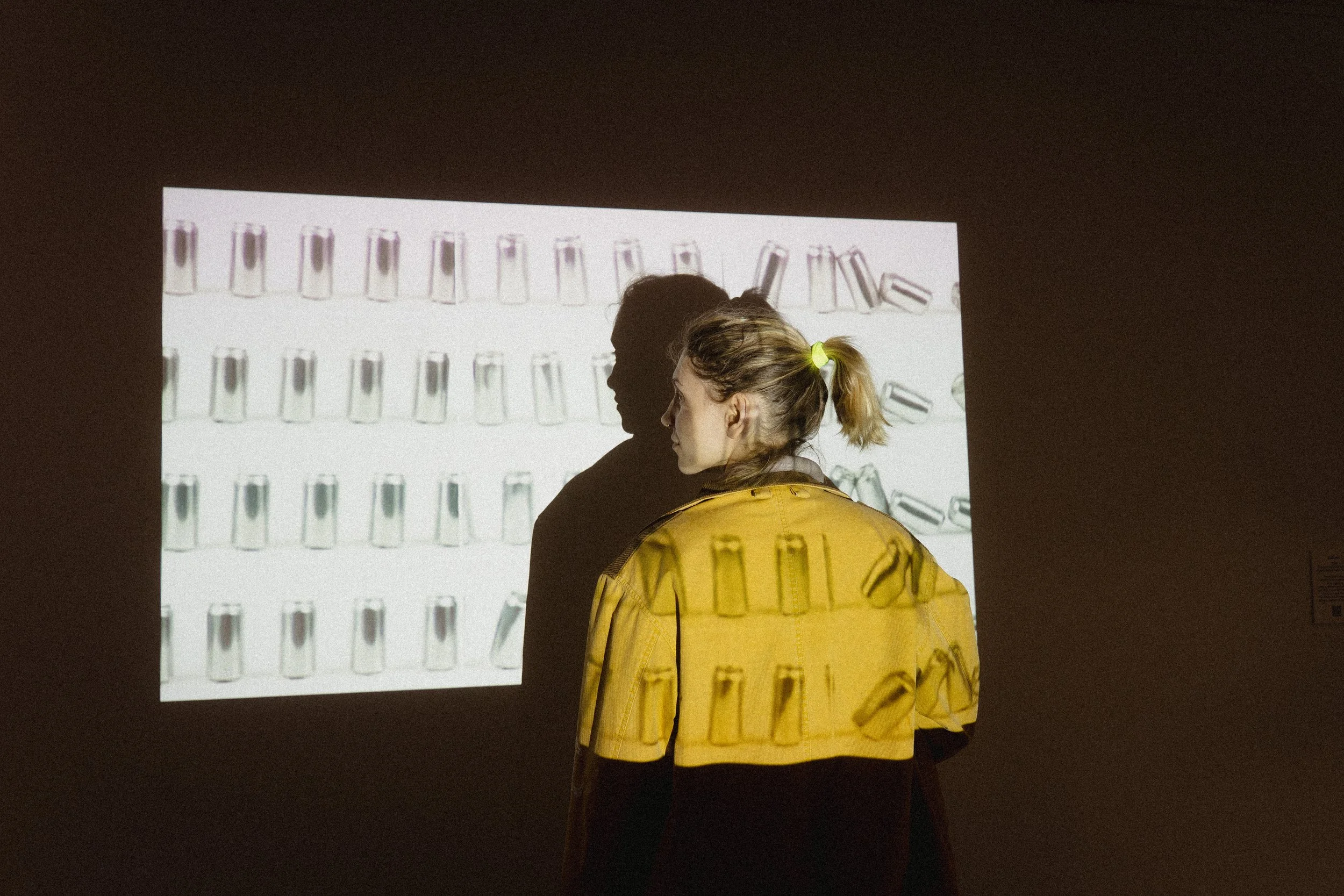
A visitor in the CAN-not projection at Proto PS. Photo by Maria Kazikhanov @photoshurup
I invited visitors to drink part of the exhibition
My first solo exhibition opened on November 7, 2026, during the Hoboken Artists’ Studio Tour. I brought together ceramic sculptures, a wall installation, and video. One work began with an empty acrylic cube and took shape as visitors contributed to it.
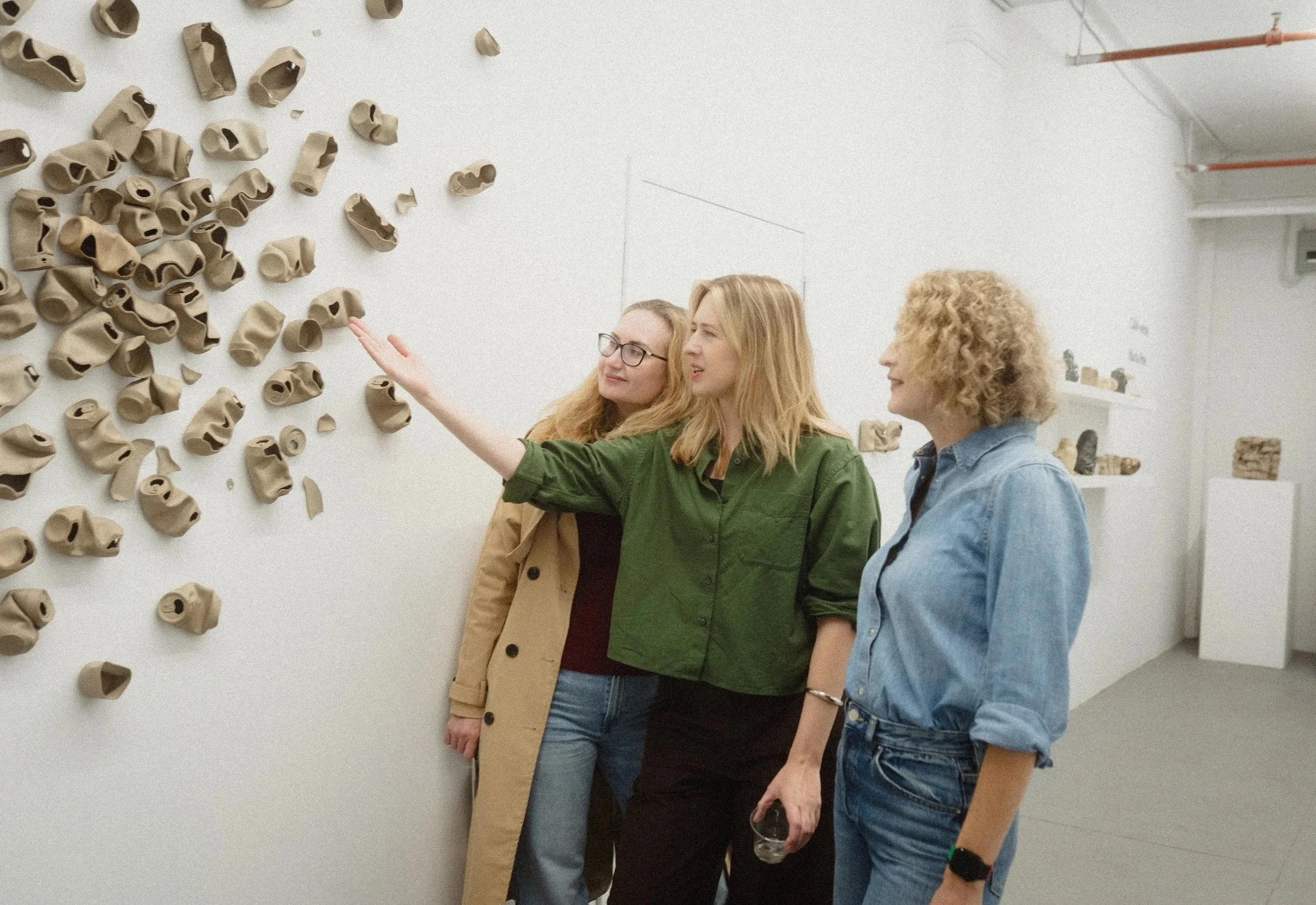
With visitors beside CAN-stellation during the opening. Photo by Maria Kazikhanov @photoshurup
Before the entrance
Just outside the gallery, visitors encountered CAN-not, a video triptych I made for Code Error, a project curated by Julia Sysalova. All three channels begin with the same image: neat rows of aluminum cans. I gave the AI a different prompt for each channel. On one screen the cans hold their formation. On another the rows begin to break up. On the third the cans themselves become almost unrecognizable.
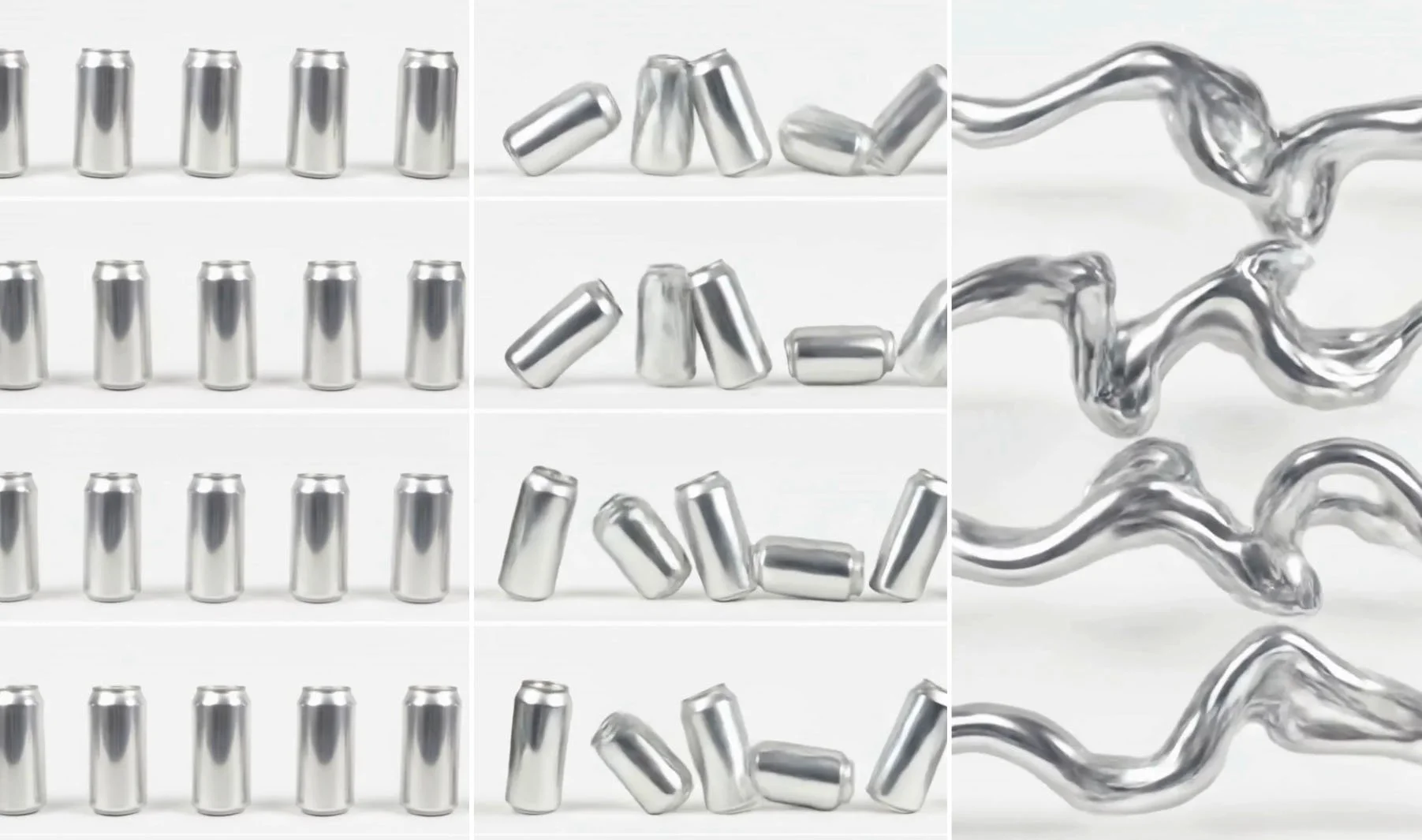
CAN-not, 2026. Still from the three-channel video installation.
Inside the gallery, those rows continued on two white shelves.
Portraits on the shelf
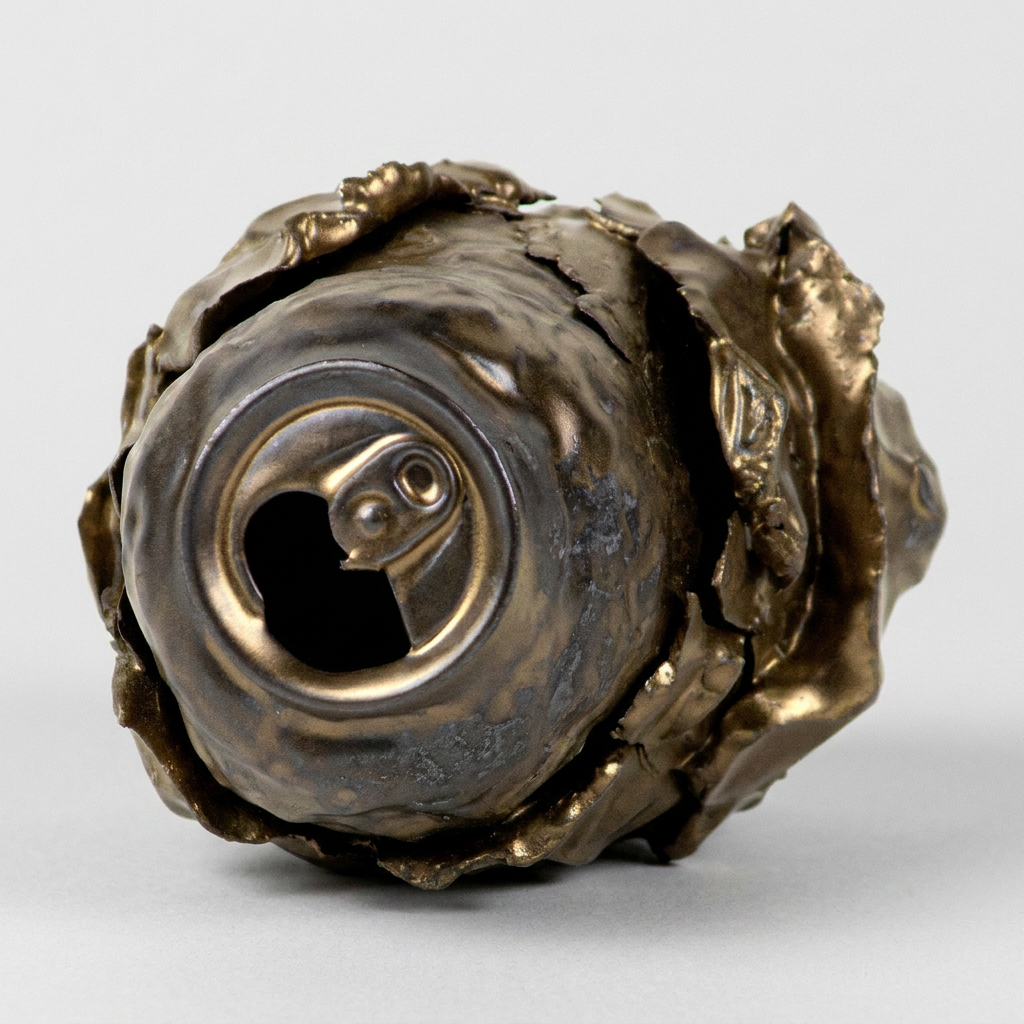
In CAN-verse, I remake a piece of disposable packaging in clay, the material from which the first human was formed in stories of creation. Wet clay takes the imprint of the hand, fire gives it permanence. Across a series, you can see how differently the clay responds to the same gesture.
One can seems to slump with exhaustion. Another leans toward its neighbor. I think of these sculptures as mirrors. A familiar posture might remind you of yourself or of someone close to you.
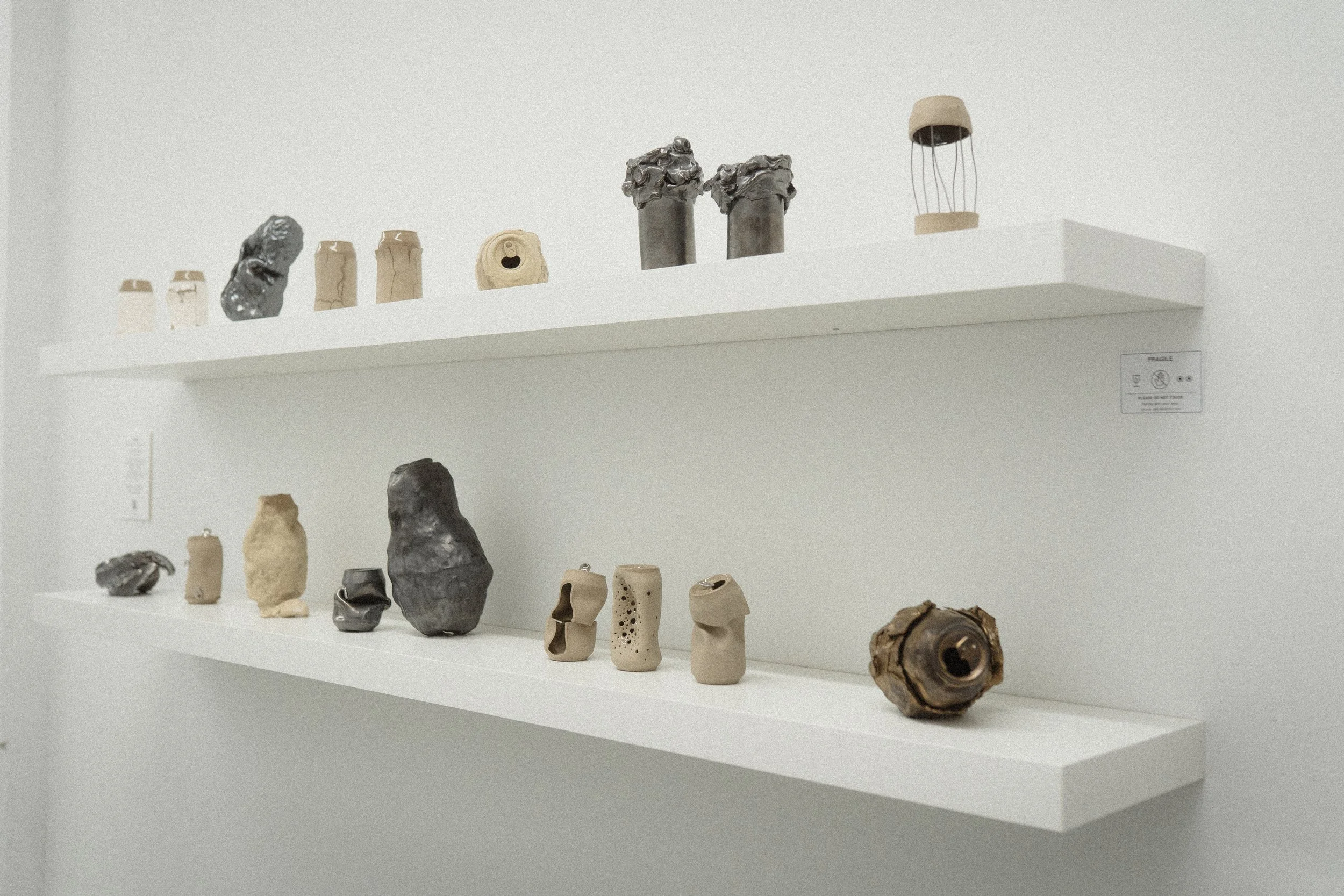
CAN be. Installation view with ceramic works from several CAN-verse series. Photo by Maria Kazikhanov @photoshurup
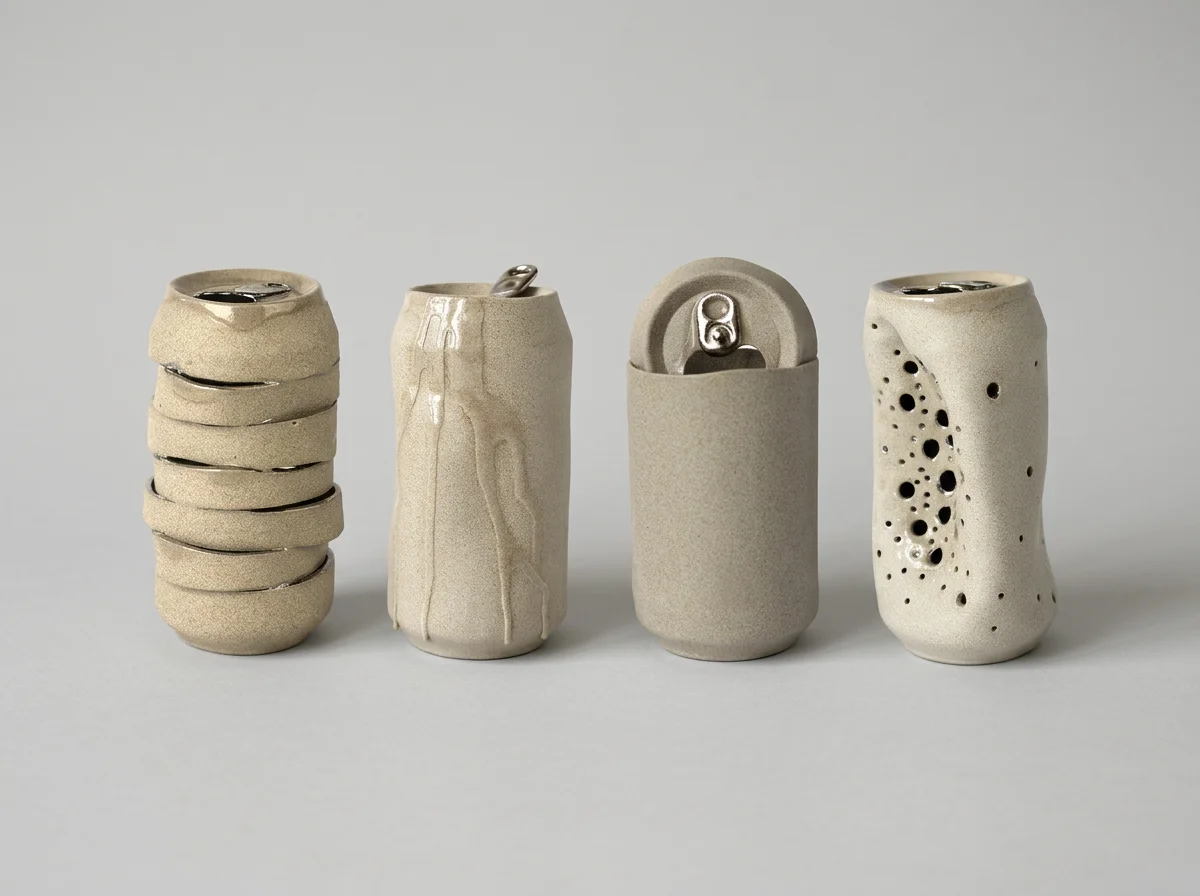
Selected ceramic works from CAN-verse. Photographs by Maria Poe
From shelf to wall
The gallery’s long corridor let me change the scale of the work as visitors moved through it. Beyond the individual portraits were the Six-Packs. Each group of six is a small social unit, with every can’s position shaped by those around it. Across the corridor was a white brick wall. You could imagine building another wall out of these blocks.
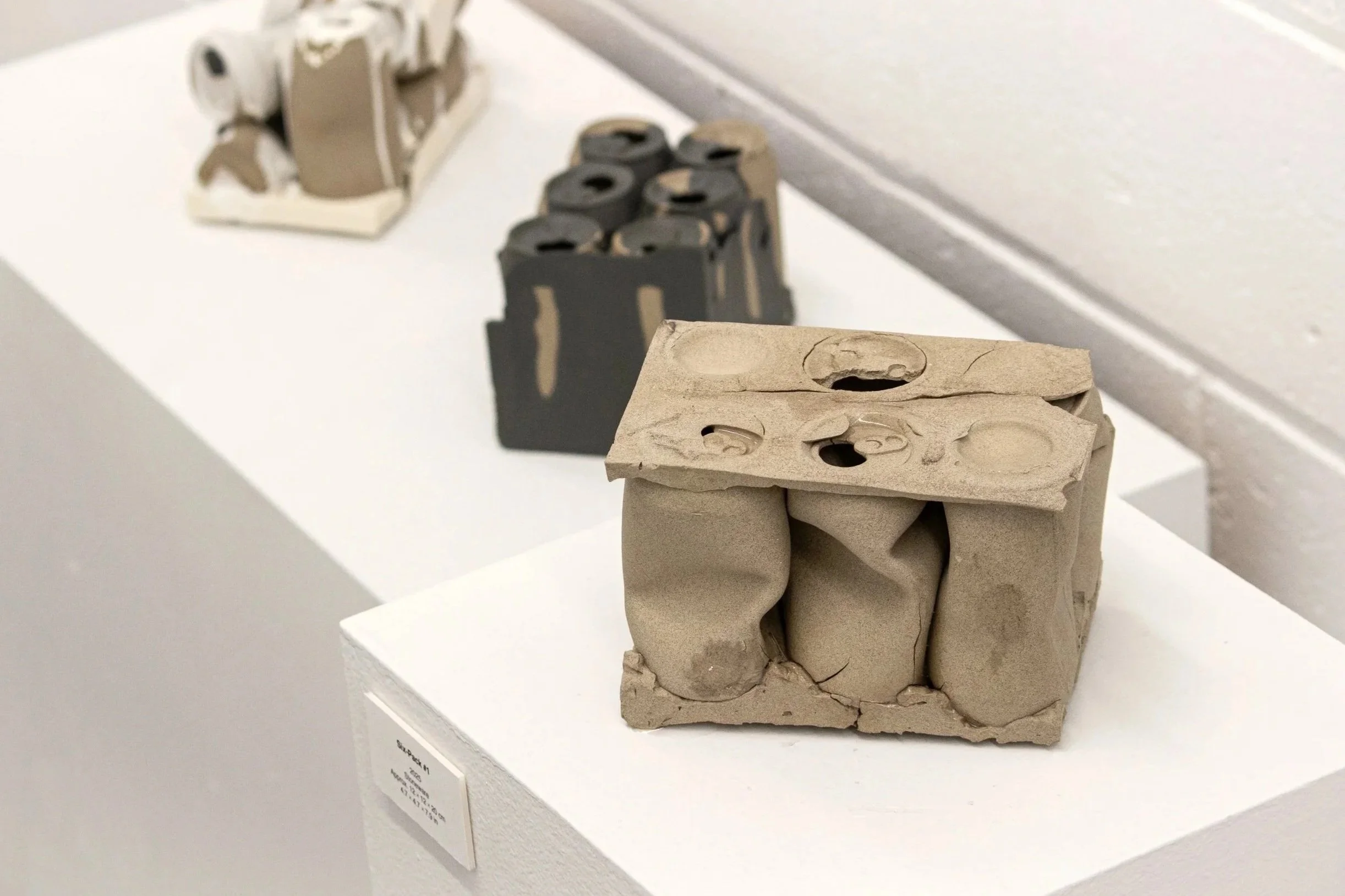
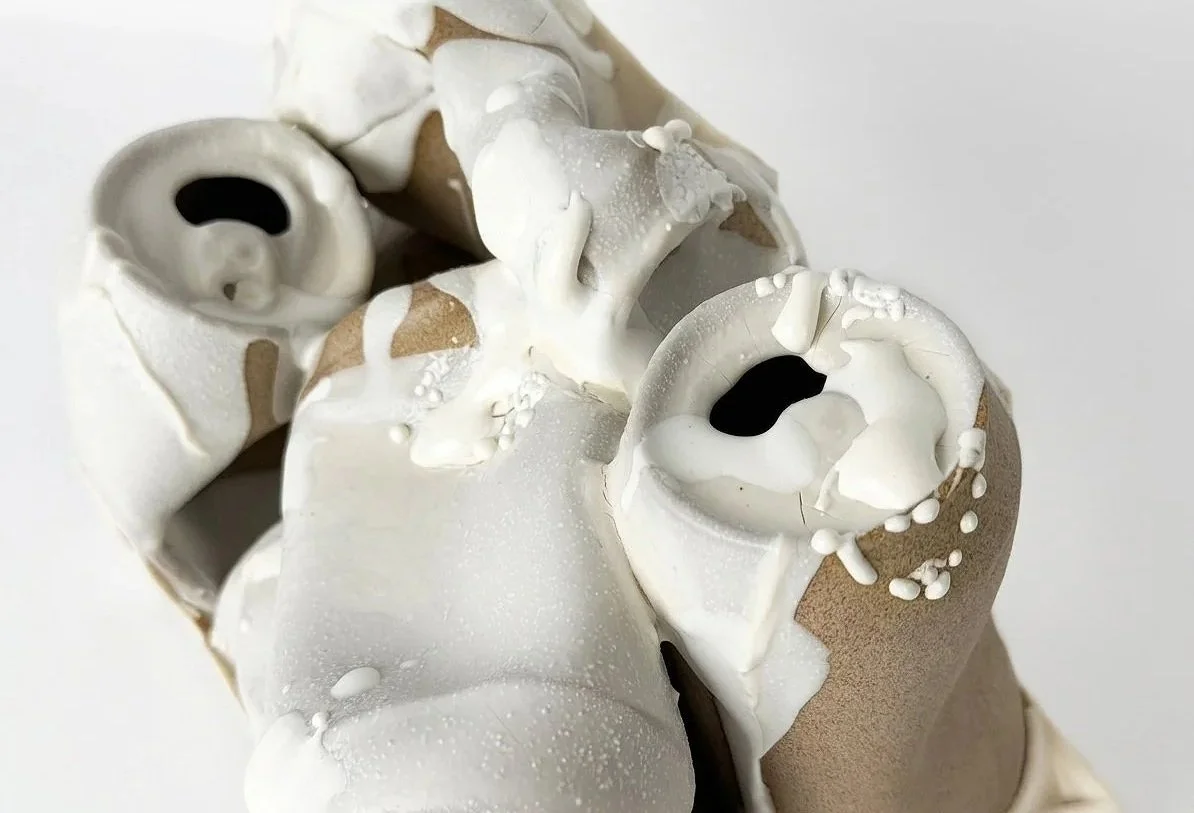
Six-Packs at Proto PS.
Installation view and detail.
Photographs by Maria Poe
In CAN-stellation, ceramic forms scatter across the wall as if in the aftermath of an explosion. Each has its own silhouette, but all are cut at the same angle, as though marked by a single event. The scattering could be the birth of a universe or the breakup of something once whole. In another space, the same pieces could form a different composition.
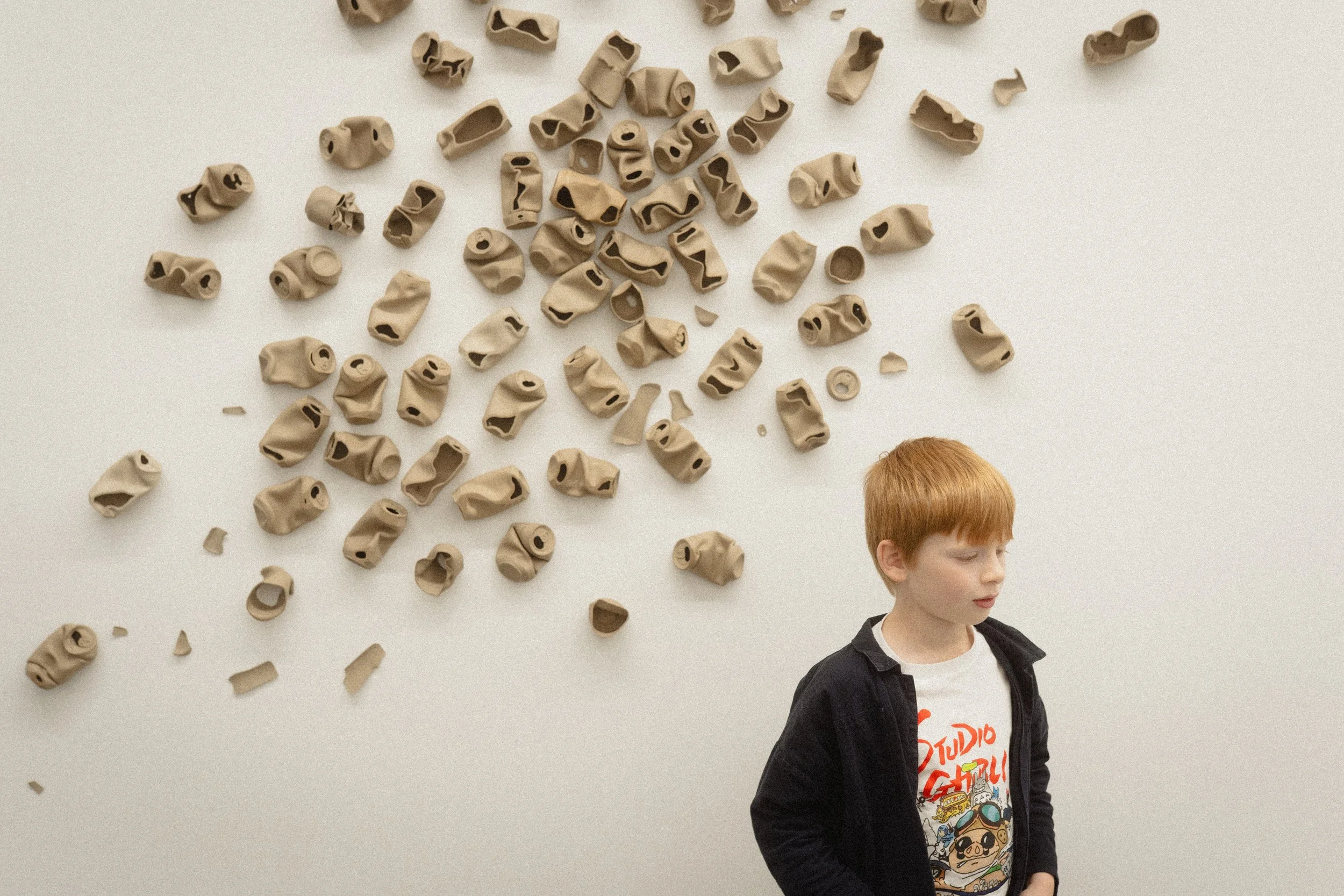
CAN-stellation, 2026. Wall-mounted stoneware installation, 1.8 × 1.8 m (approx. 71 × 71 in). Photo by Maria Kazikhanov @photoshurup
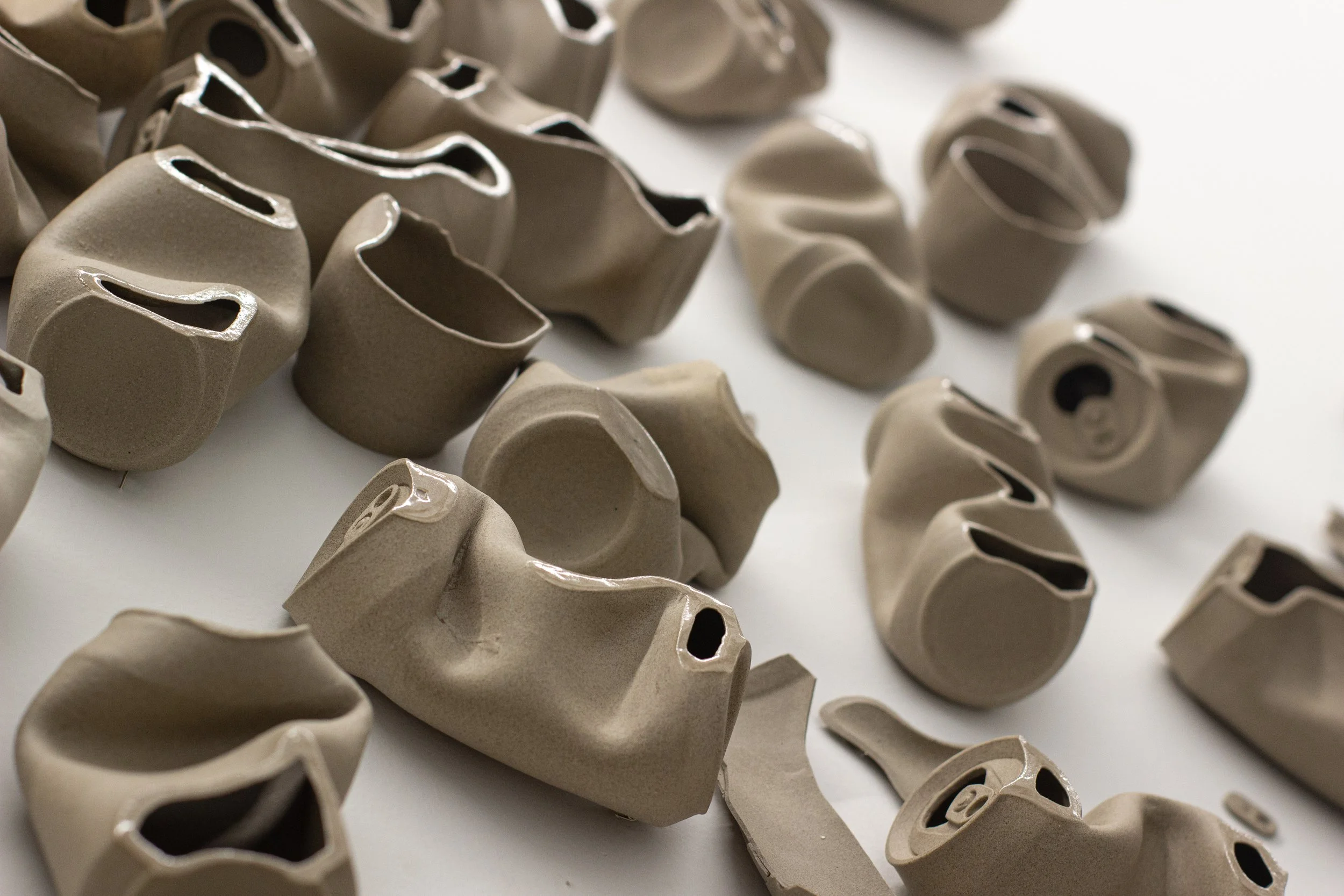
Stoneware forms from CAN-stellation, detail. Photo by Maria Poe
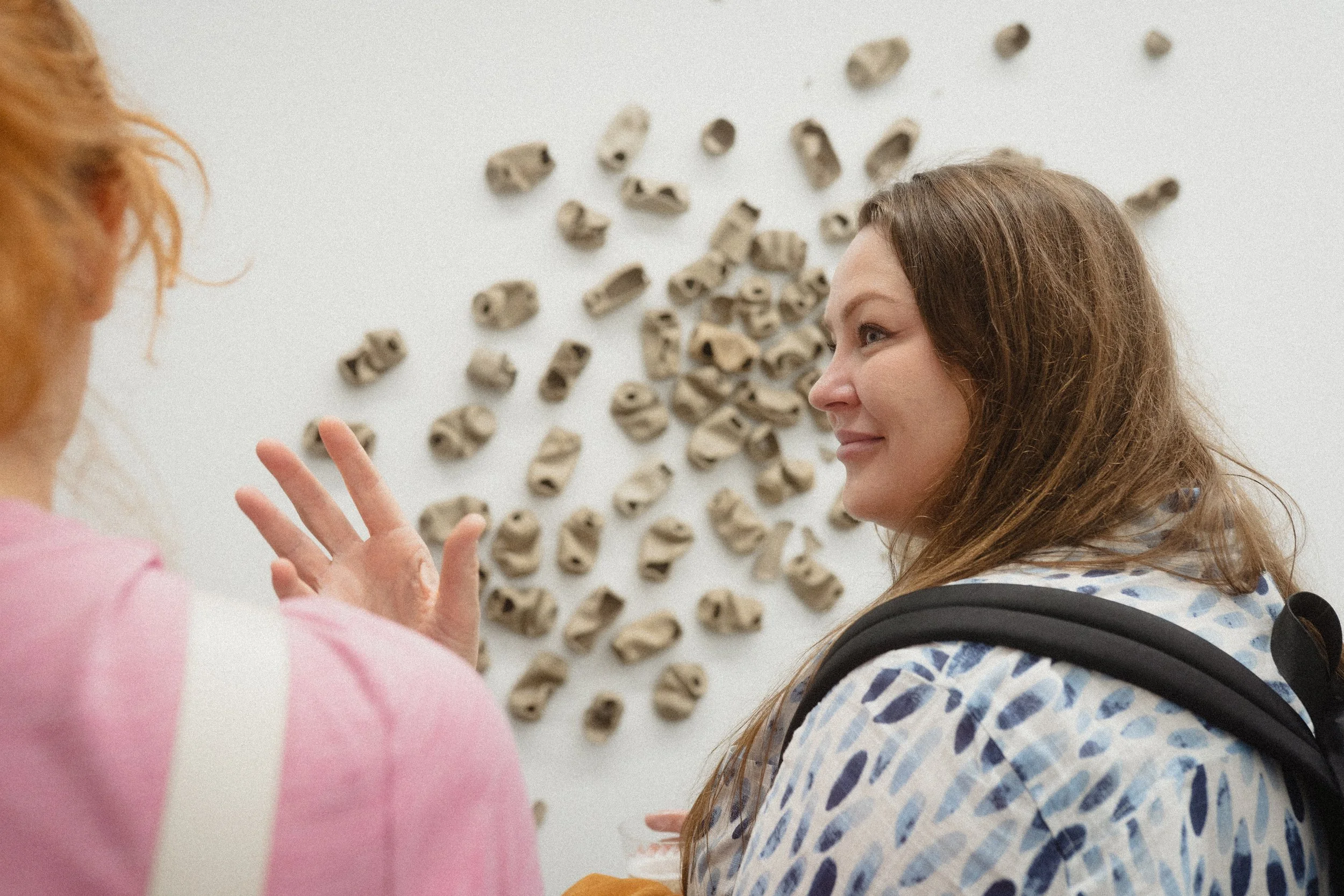
Visitors beside CAN-stellation during the opening. Photo by Maria Kazikhanov @photoshurup
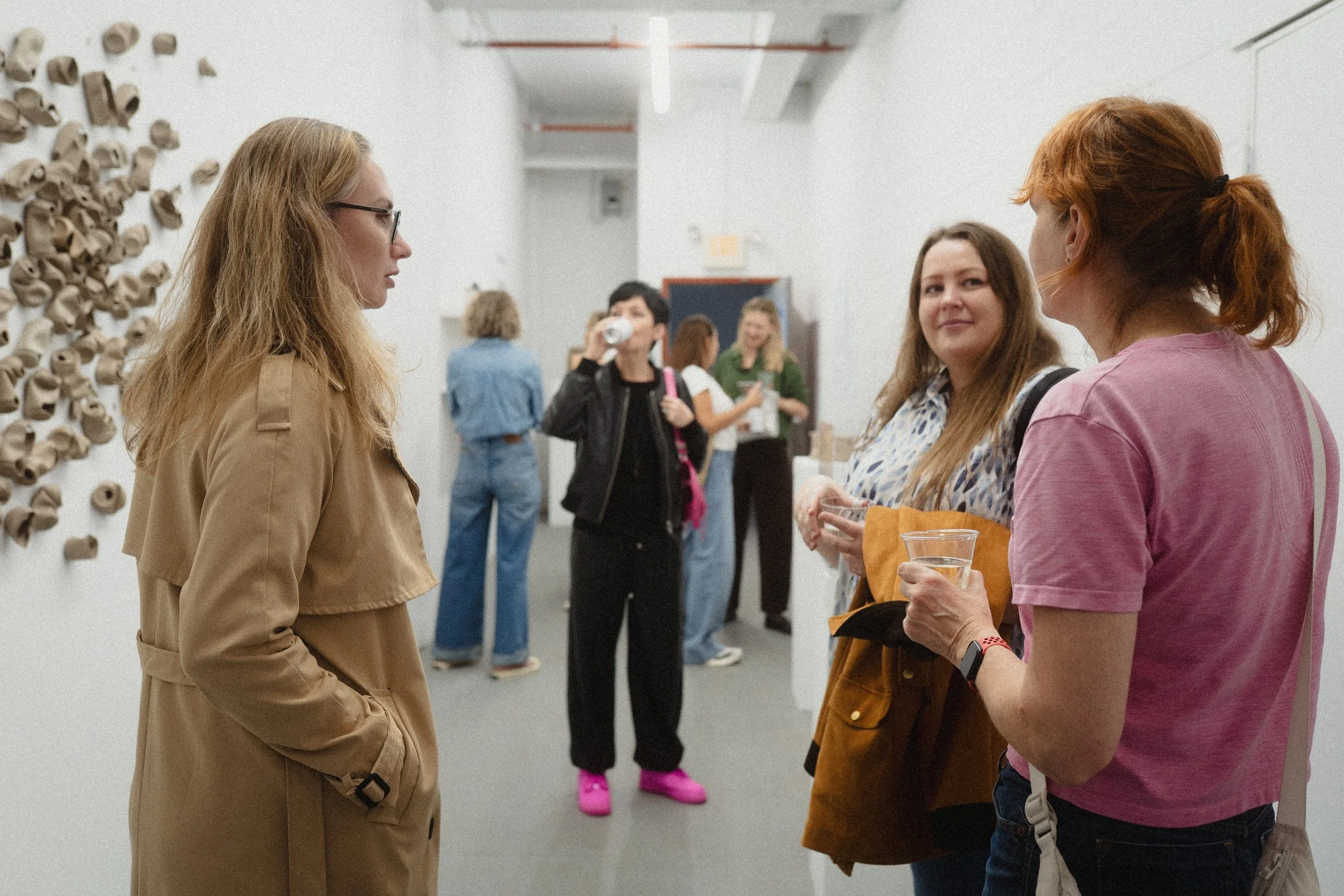
Photo by Maria Kazikhanov @photoshurup
Two cubes: the same prompt
I placed two objects of similar shape and size at opposite ends of the corridor. I built CAN-tainer #1 from crushed ceramic cans.
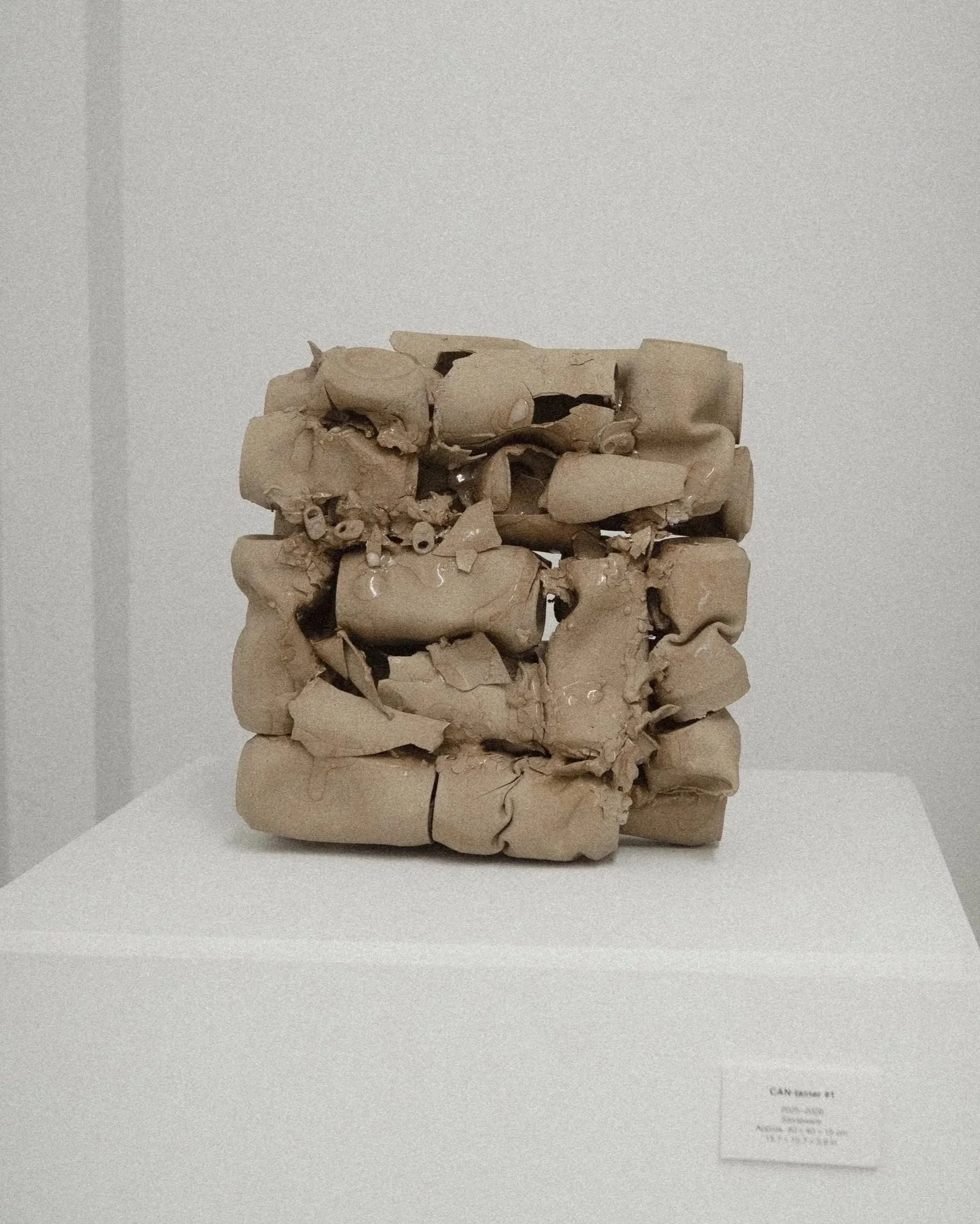
CAN-tainer #1, 2025–2026. Stoneware. Photo by Maria Kazikhanov @photoshurup
The acrylic cube began empty. As visitors added their cans, the arrangement changed. Each person encountered a composition shaped by those who had come before them.
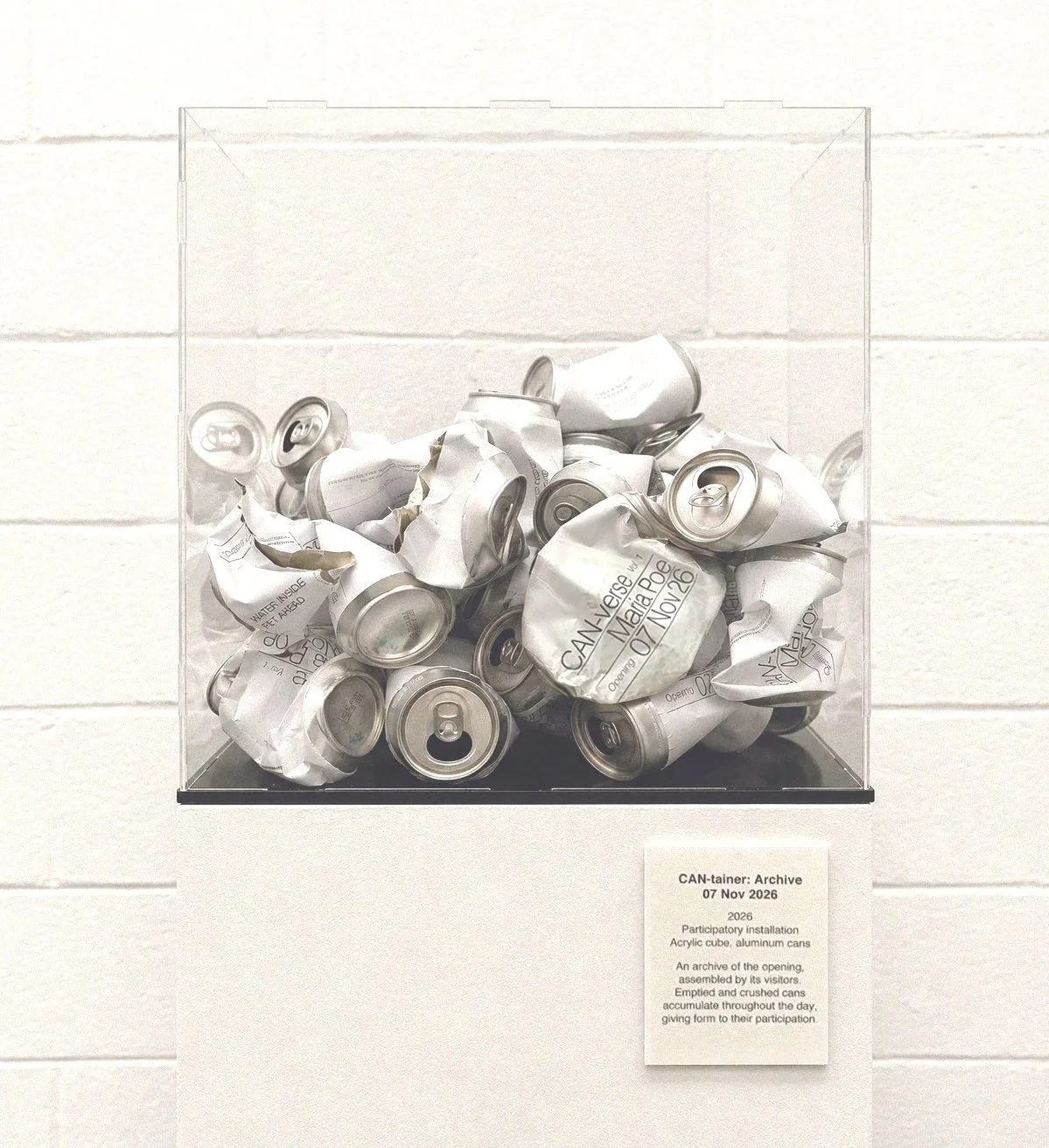
CAN-tainer: Archive — 07 Nov 2026. Participatory installation in acrylic and aluminum, assembled by visitors during the opening. Photo by Maria Poe
In the studio, I translated the shape of an aluminum can into clay. At the opening, the gesture returned to aluminum in other hands. Some visitors squeezed their cans between their palms. Others tore them or stepped on them. CAN-tainer: Archive — 07 Nov 2026 holds the traces of those decisions. I’ll return to the forms they made as material for new work.
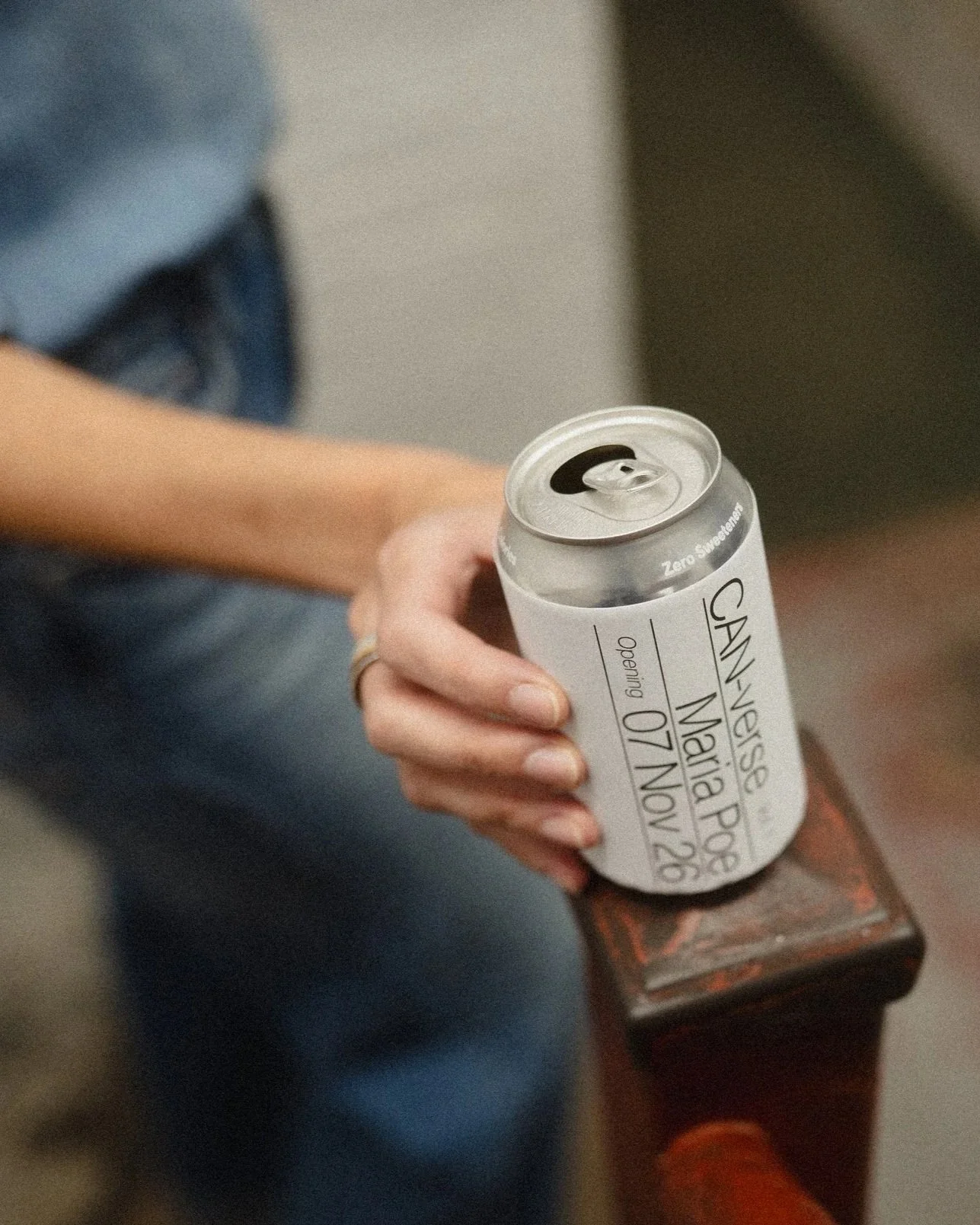
An invitation you could open, drink, and crush. Photographs by Maria Kazikhanov @photoshurup
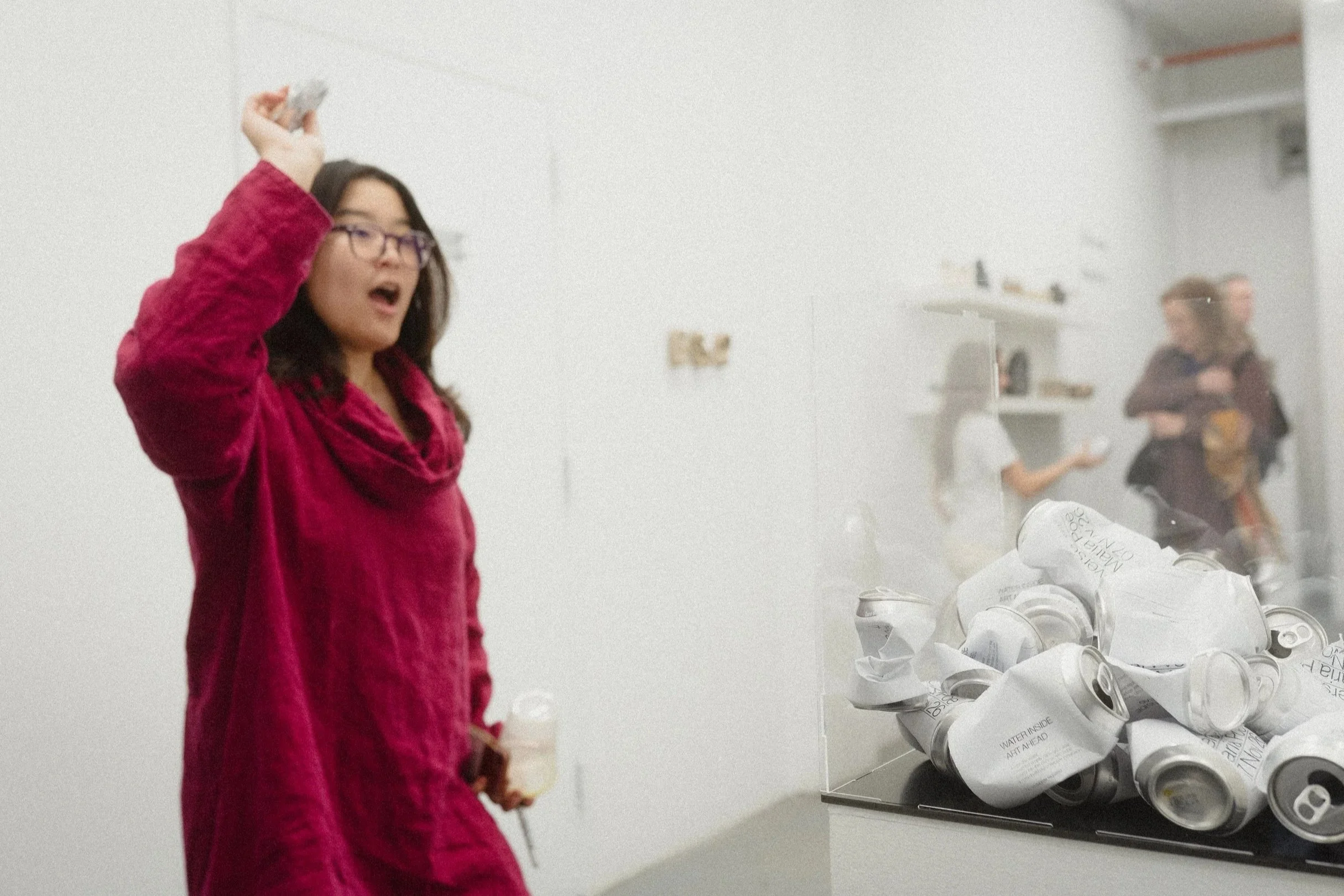
For some, the archive was a game of aim.
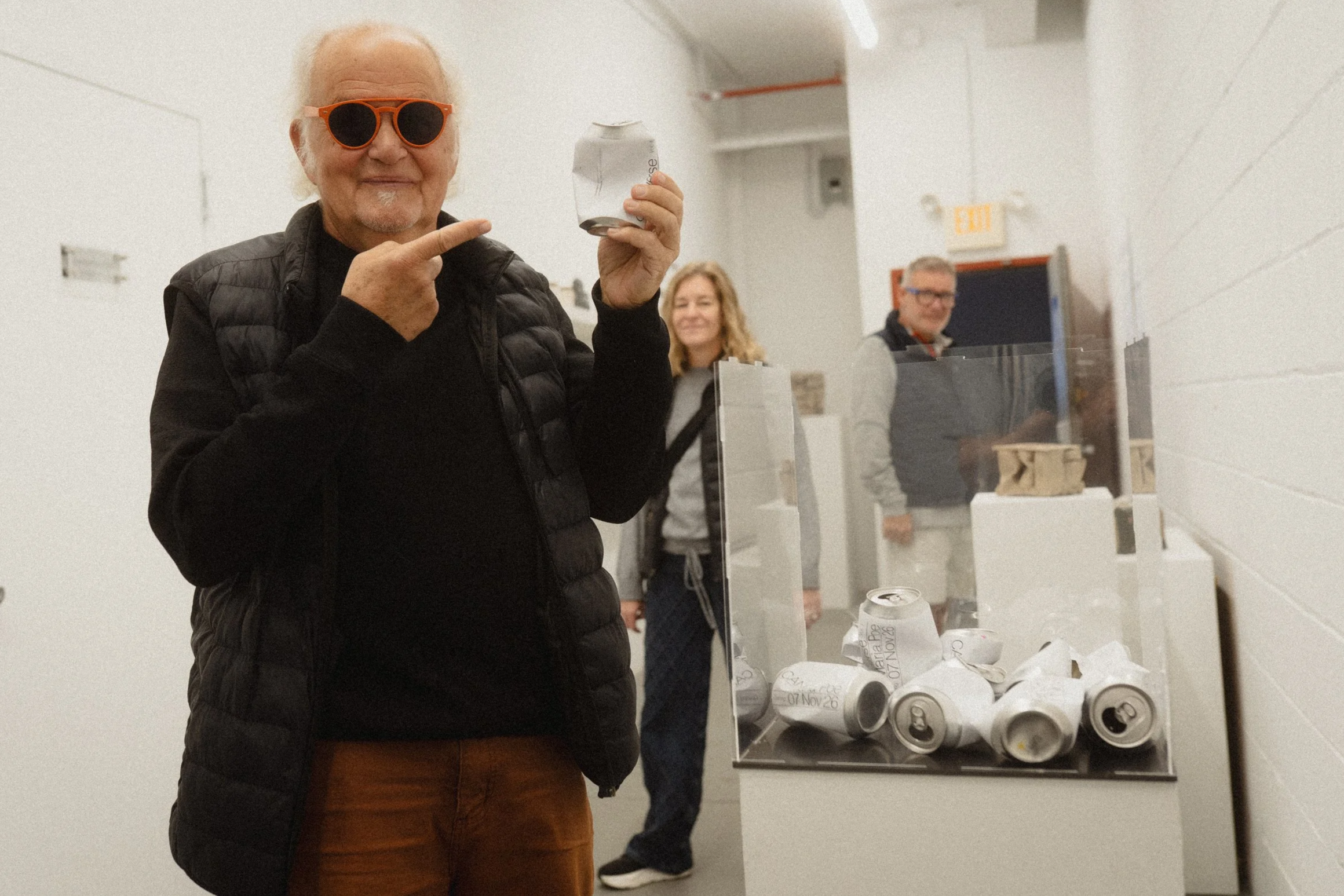
Some gave their work a proper unveiling.
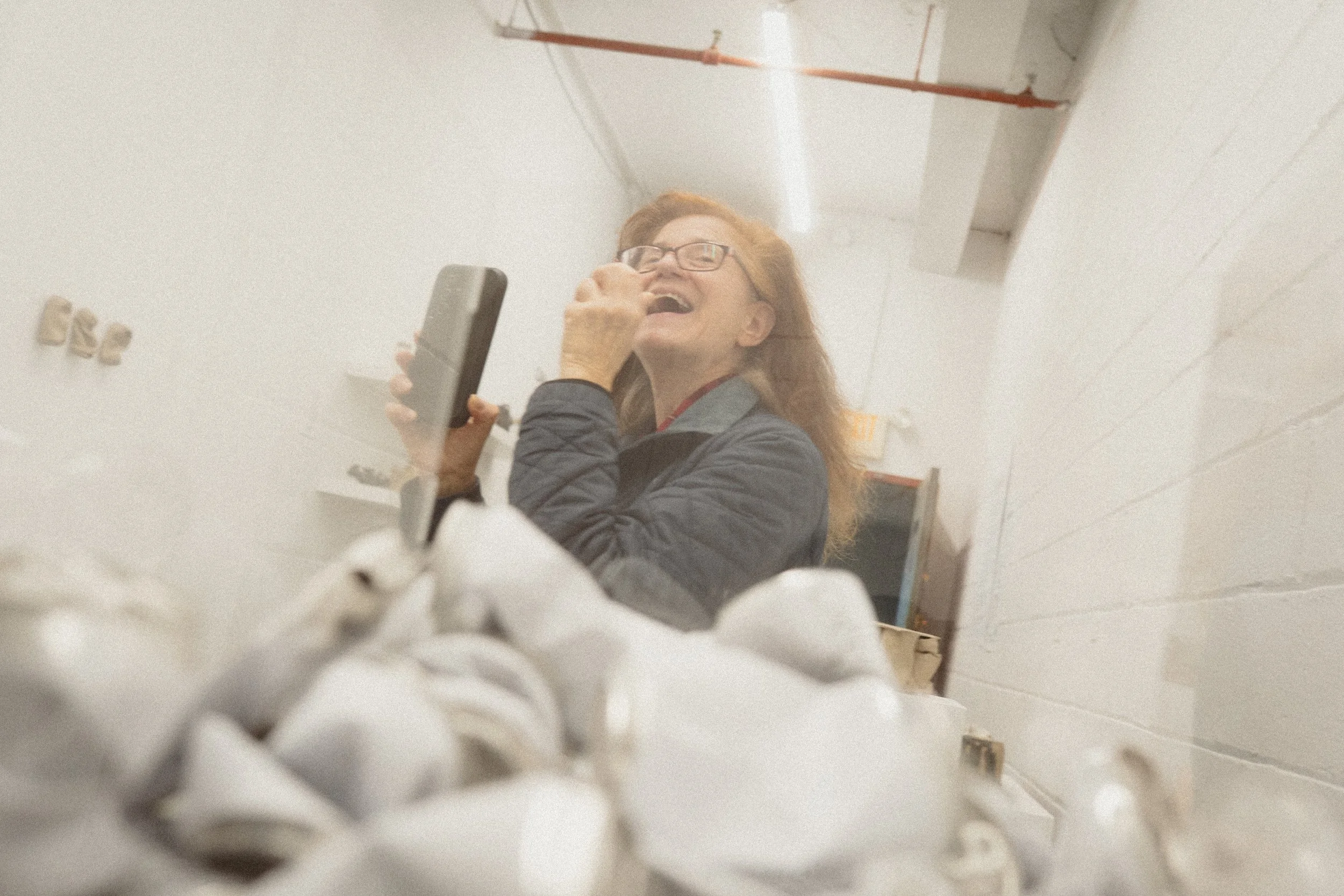
Geri Fallo, a longtime organizer of the Hoboken Artists’ Studio Tour, considers her next move
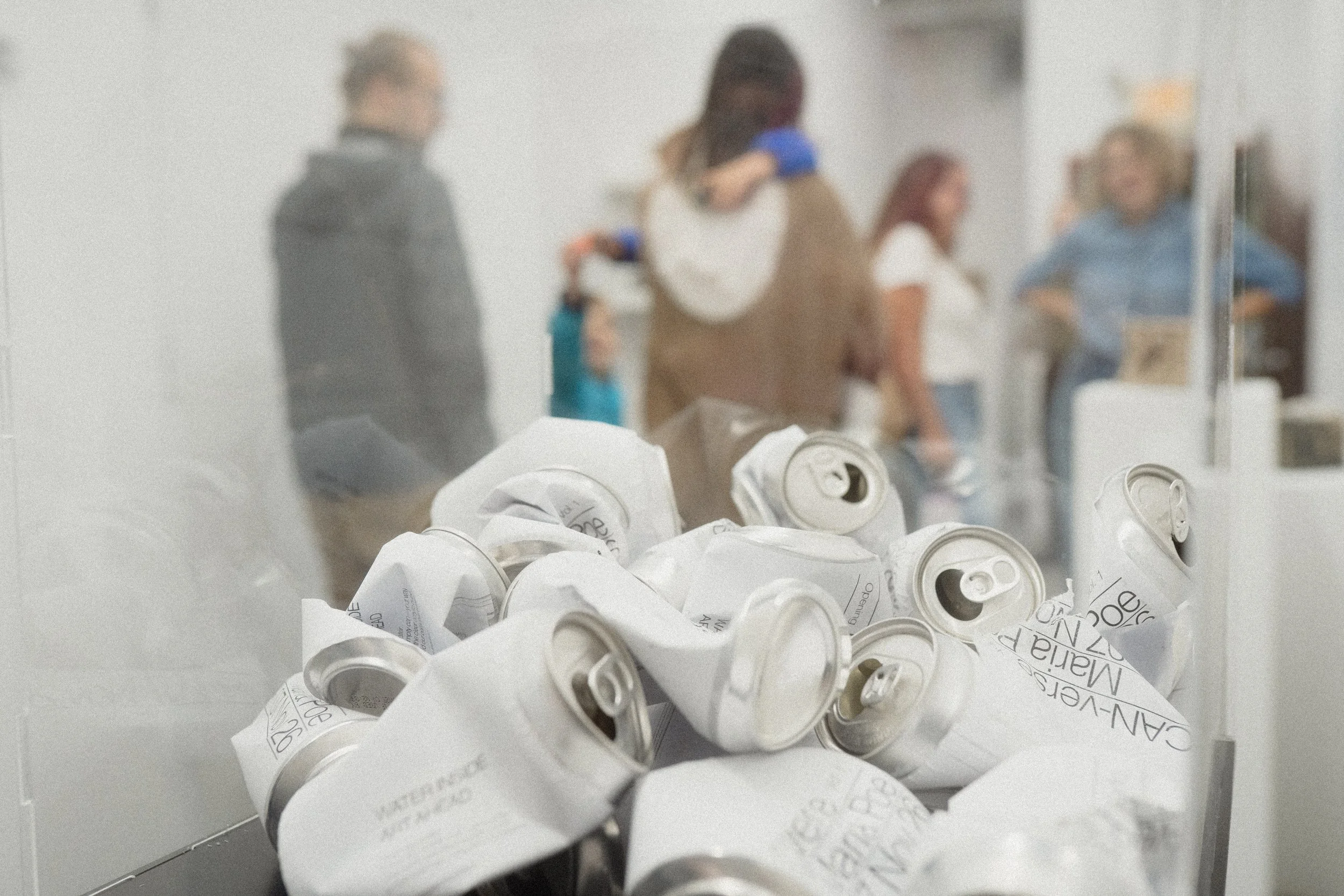
Same label. No two alike.
My thanks to Nick De Pirro, Jillian Van Volkenburgh, and the entire Project Studios team for their support in bringing my first solo exhibition to life at Proto PS. And thank you to everyone who lent a hand, came to see the work, or crushed a can.
See you at CAN-verse Vol. 2.